Thursday, September 12, 2019

9/12/19 Joshua Cesario Period 8

Joshua Cesario
9/12/2019
Modern Mythology 2020


So this is my first blog, so how would I write this… oh yeah right introductions, I am Joshua Cesario today’s blogger and senior. Now with that aside from that, time for the meaty stuff. We started today with a poem, one I am familiar with, “stopping by woods on a snowy evening”, by Robert Frost. Now I know a little bit about this poem and so does the class, 20 points were tossed like pennies around the room, the concept of death and hopelessness seems to be very familiar to seniors. The horse, in particular, was important as it allowed a connection to form to “the road”, the boy is the horse, pushing the man though the dark deep world towards hope. In context, there is no hope in the road just dead and gone world with no hope of recovery, the lesson Mrs. Fusao taught about the depressing state of “the road”, by explaining her own story. The story explains how two people could live in two different worlds, as Mrs. Fusaro told, she met with a traditional family and as a result, collided with them in one front, kids, Mrs. Fusaro loves kids but she doesn't want any of her own an idea which is very often seen as weird and alien.


Now I have to bring this in a way that doesn't seem rude but I didn't learn anything today, rather I had my eyes opened to something I always knew, I don’t need a class to tell me that I and my mom have different views on life. As for why we learned this, you need to understand that every person of every culture has their own world, and that world has its own laws and rules, only a few of which overlap with ours, knowing this information will help us understand the harshness of foreign mythology and the reality in which they reside, and now that I realized that’s also answer how she would want us to apply what we learned.


Well, it was nice writing this see yall today, tomorrow, forever, and never again.

Wednesday, September 11, 2019

9/10/19 Adam Bougaev Period 8

Adam Bougaev 9/10/2019 Modern Mythology 2020 Hi there! My name is Adam Bougaev from 8 th Period Modern Mythology class, and we are seniors of the class of 2020! Today is Tuesday, September 10, 2019, and I must say, we had quite an interesting lesson for Mythology today, and while it was unconventional, it was also quite interesting and informative We started off class with our teacher putting on a TED talk that we didn’t finish the day prior and finished it off. It was a pretty interesting video talking about how all forms of colloquial media, such as the ever-popular internet meme, are forms of folklore. I, personally, found it to be a very convincing argument, and it’s something worth considering. Every internet meme, every inside joke you text to your friends, is a little piece of folklore, and folklore as the whole is the best way to assess a culture of a time. It's also worth noting that we’ll be looking at folklore over the year (I mean, it IS a mythology class), so is this a possible foreshadowing? I guess we’ll just have to wait and find out! I, personally, think we’ll be doing some culture analysis through the literature we’ll be reading. After that, we moved on to a more pressing matter: The Summer Reading Project. Initially, I felt concerned, as many school projects are long and insufferable. This project, though, was a bit different. It was a group project in which we had to design a book cover illustrating a prequel to a book we had read over the summer, called The Road by Cormac McCarthy. It’s a post-apocalyptic story about a father a child wandering, scavenging for any resources left to keep them alive in a dead world, where the cause of the scenario is never confirmed. I’ll tell you that my team had a tough time deciding what our cover would be about. We were tasked with coming up with one backstory to explain the chaos, but our team managed quite a few theories. Of the bunch, the most prominent theories in my mind were that of a “Judgement Day”, a nuclear war, and a huge volcanic eruption. The eruption, in my head, was the soundest theory as it explained the ash mentioned repeatedly in the story.

Tuesday, September 10, 2019

9/10/19 Shannon Brewi PD 7

9/10/19
Shannon Brewi PD 7


Aim: How can we demonstrate the symbolic and metaphorical meaning of an
individual’s personal apocalypse through Cormac McCarthy’s example in The Road?


Notes:
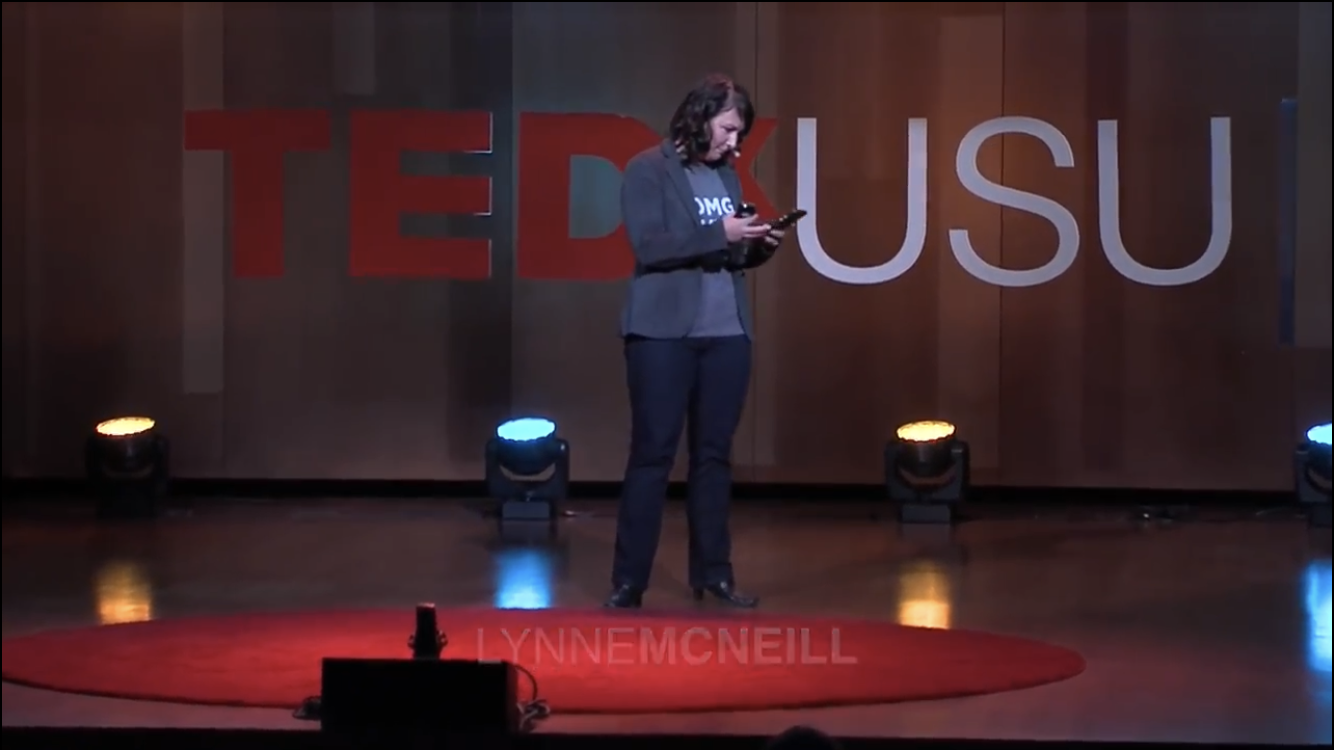
  • We continued watching the TEDTalk about how the Internet contributes to folklore by
Lynne McNeill.
  • McNeill relates the saying, “If you give an infinite number of monkeys an infinite number
of typewriters, they will eventually come up with the collective works of Shakespeare” to
the Internet. She says that most people believe this statement was proven wrong
considering that almost everyone in the world has access to the Internet, yet instead of
taking advantage of their endless possibilities and creating something great, they waste
their time making memes.


  • However, folklore doesn’t focus on the cultural influence of only the rare talents. Instead,
it focuses on the culture that everyone is capable of creating, such as stick
figures and paper airplanes.


  • She emphasizes that folklore is the culture of everyday people.
  • In the past, folklore was never formally recorded, so it was difficult to fully grasp and
understand the culture of a society at a given time. But now, with the Internet, folklore is
inadvertently archived, giving people in the future the ability to thoroughly understand our
culture.


  • Therefore, making and sharing memes is participating in the documentation of current
folklore. McNeill argues that spending time on the Internet is in fact not a waste.


  • It can be helpful to study in the future, as the Internet not only captures news stories,
but also how the public responds to them.


  • People may think that memes are unimportant, but McNeill asserts that if something is
staying in circulation, it is important and should be documented.


  • Therefore, the Internet is a worthwhile part of our folklore culture.
  • Dejon shared to the class that the video made him realize that everyone in the room
could be considered a folklorist due to using the Internet. He also connected old viral
YouTube videos, like the Annoying Orange, to folklore.


  • Iandra related the video to an article that claims that our generation is culturally illiterate.
She hopes that McNeill’s claim will prove that our generation is culturally literate in our own
way, and even encourage people our age to use the Internet to become more culturally
literate in a traditional way.

  • Shannon added that regional and generational dialects are recorded on the Internet, as
well.


  • Ms. Fusaro introduced that we have a Google Drive folder with the purpose of being
filled with folklore by the students in our class. The one from last year is mostly filled with
mythology-themed memes.
  • She assigned our summer reading project, which is to make a book cover for a prequel
of The Road and present it, giving an explanation of our design and what we think happened.
She then gave us the rest of the period to discuss our project ideas with our teams.


Student Reflection:

We discussed folklore as a continuation of our lesson yesterday where we defined and discerned categories of literature. It’s important to know the differences between types of literature, such as legends and fairy tales for example, as we will be learning about them throughout the year. Since folklore is one category that we are less familiar with, we discussed it in depth to highlight the extent to which we come across folklore every day, and to realize that we are active participants in current folklore. For instance, the simple act of going on the Internet is basically like walking through a virtual modern museum. Additionally, we learned how we will further explore and analyze the book we read over the summer, The Road. We will create a project to display the conclusions we drew from the book and compare our unique interpretations with the rest of the class.

9/10/19 Samiha Aladin Period 2

Aim: How can we demonstrate the symbolic and metaphorical meaning of an individual’s personal apocalypse through Cormac McCarthy’s example in The Road?


Today’s lesson began by finishing a TEDTalk our class had watched the previous day (https://youtu.be/PBDJ2UJpKt4). The video was about people’s common misconception of the word “folklore”, and how it expands past that of old, rustic stories. Rather, the folklore of today would be memes or stories - anything that contributes to the “culture” of our society. And the medium? Not by word of mouth, as folklore is often associated with, but rather the Internet. Folklorist Lynne S. McNeill says that “Making an internet meme, or even just sharing one on social media, is participating in the documentation and preservation of contemporary folk culture.” As a result, don’t feel so bad after spending an hour browsing the internet, because it’s worthwhile if you’re able to document and preserve the culture in which we experience today.
The second part of class was discussing our upcoming project based on The Road by Cormac McCarthy. Groups will have to create a book cover depicting our interpretation of what happened prior to the events of The Road? What would its prequel be like? We would also have to support our book cover with a presentation. In class groups brainstormed ideas as to what events might’ve transpired before the book’s setting.
    From the video, I learned that me scrolling through Instagram or reading Buzzfeed is not a giant waste of time. By finding, creating, and sharing memes, I am experiencing and participating in this new style of folklore. No longer is our culture shared by word of mouth, but by internet, which is something not many people realize. The video definitely makes me feel better about being on the internet a lot, as I can just say “I’m participating in the documentation and preservation of contemporary folk culture.”

9/10/19 Brianna Assante P.D 1

We discussed the TED talk that we watched yesterday, which compared memes to folklore. The speaker presented the idea that folklore, and by extension memes, showcase the culture of the people from that time period. While scholars may not pay attention to it, the information that can be gleamed is still just as important as other sources.

We then went over the summer reading project. The goal is to make a book cover that illustrates what happened prior that caused the characters to act in the way they did. We also have to make an accompanying presentation to explain our choices. 

9/10/19 Annotations on The Birthday Party - Riya Agrawal - PD 5

Riya Agrawal
Sophomores 2020
September 10, 2019
Period 5
Blogger #1

Aim: How can we develop our close-reading skills through the analysis of Katharine Brush's "The Birthday Party"?

Today was the second day that we worked on annotating the short story, The Birthday Party. We worked on close reading the short story and worked with a few lines at a time to annotate. We tried to understand the text further than just what the text said. We highlighted words or phrases that stood out to us and talked about why they stuck out to us and what they told us about the story and the plot as a whole.

In the story, a married couple goes out for dinner on the husband's birthday. The wife sets up a little surprise for his birthday in the form of a simple birthday cake with a pink candle in the center. We annotated and inferred that, based on previous information on the story, since the man seemed smug and arrogant, the small cake may not be appealing for the man. He seems like he would be embarrassed or dissatisfied with the small gesture.

We can use annotating to help us close read other pieces of writing. As we continue with the year, we will be reading other books and plays and by practicing annotating we will be able to understand further than just what the text says.

In a short story, I feel like annotations are especially important because since the story is so much shorter than a regular book or article, every word and line is important. The author packed much more purpose in how they described the characters and why s/he decided to write it the way they did. I think that if we are able to understand why the author chose the write the story the way they did, we will be able to go beyond just the surface of the text.

Thursday, September 5, 2019

Welcome to Class Blogging 2020!


Dear Students and Families,

I am so excited to welcome you to my 2020 classroom blogging initiative! Student blogging has an important role in our classroom because each student will function as a "scribe" and be responsible for group learning.

We had a great deal of success with posting blogs in 2019. Check out our journey on YouTube:


Goals:

  • To become effective global communicators.
  • To have every voice speak with the same volume.
  • To summarize and reflect upon each day's lesson.
  • To become responsible digital citizens.
  • To become creators of information.
Student Scribes:
  • One student will be responsible for writing a blog each day which includes:
    • The date
    • Your FULL NAME and class period
    • The aim
    • Notes for the day
    • MOST IMPORTANT:
      • Student reflection of the day's lesson: 
        • What did I learn?
        • Why did I learn it?
        • How will I use what I learned?
    • Student's full name and blogger number
    • **Students MUST LABEL their blogs using (at least) one of the appropriate labels:

      • Modern Mythology 2020
      • Sophomores 2020
      • Announcements
  • Students are responsible for keeping track of when it is his/her time to blog.
  • Students are to comment and respond to one another, including asking questions or asking for clarification.
  • Blogs will be published on the world wide web, so we must practice digital citizenship and remember that our audience GLOBAL, so our tone is FORMAL.
How Blogs are Graded:


  • Blogs will receive a letter grade within 7 days of publication based on the rubric above.
  • Blogs may be revised, edited, and updated if the student would like an opportunity to improve his/her grade. IF the student does opt for a revision, he/she MUST EMAIL ME with a direct link to the published blog to inform and notify me to check the blog again.


I look forward to a fun and productive school year!

Mrs. Fusaro-Pizzo