JANNY CAI PERIOD 7: MODERN MYTHOLOGY 2020
Aim: How does Cormac McCarthy use style and syntax to
create setting and develop meaning?
Hello, internet,
Today in Ms. Fusaro Period 7 class, we started out by reading
“Stopping by Woods on a Snowy Evening” by Robert Frost.
After reading we analyzed the poem, making connections
between the similarities of the poem and our summer reading
book, “The Road” by Cormac McCarthy.In the poem, the
woods are seen as an extension for the “house,” and the
“house” was depicted as a sanctuary in the middle of the wood
for the narrator. The horse, in the poem, is the narrator’s guide.
The horse can be comparable to the Boy in “The Road” as
the Father’s drive to keep on going despite being in a world
with almost nothing.
We also discussed about the lack of structure in the book, with
no quotation marks, no chapter divisions, and the endless short
sentences, representing the loss of time and order in the
post-apocalyptic world. The Father’s goal is to keep on going
for the Boy and reach the south. We also related a little bit of
this to real life about time and purpose, prompting Ms. Fusaro
to sharing a little story.
I learned how to think outside the box and closely analyze the
author’s words to establish their meaning today. This skill
is very useful during standardized tests and helps with your
reading comprehension. It’s also interesting to break down
readings and find different interpretations of it and link them
together.
|
Friday, September 13, 2019


9/12/19 Kyle Chan PD 1
Aim: How does Cormac McCarthy use style and syntax to create setting and develop meaning?
Today, we read "Stopping By Woods on a Snowy Evening" by Robert Frost. We read it as a class and began to analyze what the poem could mean. We related the term "sleep" to death and the term "house" to the narrator's family. We also made a connection from the horse mentioned in the poem to being the narrator's bridge to reality. We also connected the poem to The Road and related the characters from The Man to the narrator of the poem and The Boy to the horse.
We then compared the simplistic language the poem contained to the more detailed language that The Road has. Through this discussion, we came to the conclusion that the simplistic language added a sense of mystery. We also related the poem to have simple language because the world became very simple.
After this, we looked at an excerpt of The Road and analyzed it to depict the setting. With the dictionary being used, we decided that there was a feeling of hopelessness and that it was becoming harder and harder for The Man to live. We also concluded that the abandonment of structural rules meant an abandonment of time. To fulfill his life, The Man gave himself a purpose: to keep The Boy safe, to get The Boy to a safer place before he died, to travel South, and to carry the fire.
We can use what we learned to remember that The Road is about a post apocalyptic world where The Man is losing hope in survival but he continues to travel and try to make sure that The Boy stays safe.
Thursday, September 12, 2019
9/12 Stephanie Chen Period 5
Today in class, we continued and finished analyzing Katharine Brush’s The Birthday Party through annotating sentence by sentence to practice close reading. The procedure was basically the same as what we did the 9th and 10th.
We picked up at the presentation of the birthday cake and most of the following sentences were about the husband’s displeasure, which the class figured from prior knowledge about his personality and the “pattering applause” mentioned in the sentence.

These sentences gave us more insight into the husband’s personality and also referenced the “unmistakably married” comment in the very first sentence of the story. His displeasure showed that the couple do not understand each other well: he didn’t think to appreciate her efforts while she should have known his preferences a bit better as they were a middle aged couple.

For this sentence, we noted the emphasis on the uncomfortableness of the situation and how he had said “some punishing thing, quick and curt and unkind”. The alliteration in the three words sounded like it cut into the wife. The next sentence, which was also the last, ended things somberly. The wife was crying and hiding under her big hat. We didn’t get to annotate this as a class, but I think it summarizes their relationship well: she had been crying all to herself, hidden under her big hat, showing how the couple isn’t on the same page and it’s all one-sided.
The past few days annotating The Birthday Party sentence by sentence and together as a class has helped me see different ways of annotating and its importance in understanding text. Previously, I used to just annotate by highlighting and making a few marks, but now I see just how much information we can gather from just a few sentences if we read closely and how important diction and syntax are.
9/12/19 Jolene Chan Period 2
Aim: How does Cormac McCarthy use style and syntax to create setting and develop meaning?
Do Now: Read Stopping By Woods on a Snowy Evening by Robert Frost
Summary
In the poem, the narrator enters into a forest. He is on a journey to get to a house on the village but he stops to admire the scenery and to have a moment in peace with his thoughts. The narrator almost chooses to stay in the forest until his horse shakes the bells on his harness to remind the narrator to continue on his journey. In the end the narrator chooses to leave the forest and continue on his path.
Analysis/ Symbolism
- The forest is what separates the narrator from going to the house on the village which is actually his own home. The forest which is characterized as “dark and deep” symbolize the narrators inner sadness and hopelessness. Since he’s not close to home (physically and mentally) he doesn’t have a sense of purpose or feeling of belonging. Instead he is filled with hopelessness and sadness.
- Sleep is also frequently mentioned in the poem. The narrator must finish his journey back home “before [he] sleeps”. Repetition is also used in the last two lines, “And miles to go before I sleep, And miles to go before I sleep.” Sleep in the poem equates to death. The narrator has to continue to live and find the passion for life rather than succumbing to sadness by staying in the forest. It shows how he has so much to live for before he dies.
- The horse is the thing that connects him back to his home and reminds him that he must continue on his journey. The journey is not just a way to get back home but it’s also a means of self discovery. When he reaches his home he would have found his passion and sense of purpose again.
Connecting The Road to Stopping By Woods on a Snowy Evening
- The horse in the poem is analogous to the boy in The Road. In the poem the horse was the one to remind the narrator to continue his journey and it also reminded him of his home. In The Road the man looks to his son for hope. Numerous times in the novel, the man was contemplating death and whether he would be able to shoot his son. However, whenever he saw his son he also saw the fire in him which gave him hope and allowed him to carry on.
Setting of The Road
- During our discussion we noticed how Robert Frost has a peaceful tone in his poem and makes death seem like a natural part of life. In The Road, McCarthy makes death seem dark and depressing. This contrast can be because of the different settings the pieces of work are in.
Student comments (to the quote above):
- Senan defines glaucoma as slow vision loss due to high pressure. He said that the high pressure the man went through in the book was the burden of trying to survive when he felt there was little to live for. This shows how the father saw the world. Life, hope, and will were slowly disappearing from his eyes and he was watching it happen.
- Justin added how for glaucoma there is no way of reversing the vision loss though you can only slow it down. He connected it to the book and how although the father knew he was dying he prolonged it and gave his son more time with him before he left.
Structure... and Time
- Mrs. Fusaro noted how in The Road McCarthy ignores typical structural rules. He doesn’t use quotation marks, keeps sentences relatively short and paragraphs in large chunks. The reason McCarthy did this was to emulate how in the setting of the book time and structure no longer existed. Instead, it was the father that kept on trying to create a structure for his son so he would find purpose in their journey. There is also the loss of time in the book since there were parts in the book where the father forgot the year they are in.
Reflection:
For today’s lesson we compared the themes and writing style of a poem by Robert Frost to our summer reading book The Road by Cormac McCarthy. We learned how to analyze the author's style so we could glimpse into the hidden meanings in poems and texts that might not be seen the first time we read them. The lesson showed how even the most simple use of syntax can portray a bigger meaning in texts. This is an essential skill to learn in mythology, especially for legends and religion, since symbolism is commonly used. The lesson also showed how through the various journeys we go through we will also go through a time of self discovery. This is similar to the quote, “It’s not about the destination, it’s about the journey”. Instead of just focusing on the end destination, we should also remember the lessons we gained along the way. Todays discussion also taught me that in life people tend to rely on a specific structure however it isn’t always necessary to follow it (similar to Ms. Fusaro's example about not wanting kids and breaking from her traditional family). These discussions, and the ones following this week, will be used for our projects about what led to the disaster in The Road and why the characters made the choices they did. 9/12/19 Joshua Cesario Period 8
Joshua Cesario
9/12/2019
Modern Mythology 2020
So this is my first blog, so how would I write this… oh yeah right introductions, I am Joshua Cesario today’s blogger and senior. Now with that aside from that, time for the meaty stuff. We started today with a poem, one I am familiar with, “stopping by woods on a snowy evening”, by Robert Frost. Now I know a little bit about this poem and so does the class, 20 points were tossed like pennies around the room, the concept of death and hopelessness seems to be very familiar to seniors. The horse, in particular, was important as it allowed a connection to form to “the road”, the boy is the horse, pushing the man though the dark deep world towards hope. In context, there is no hope in the road just dead and gone world with no hope of recovery, the lesson Mrs. Fusao taught about the depressing state of “the road”, by explaining her own story. The story explains how two people could live in two different worlds, as Mrs. Fusaro told, she met with a traditional family and as a result, collided with them in one front, kids, Mrs. Fusaro loves kids but she doesn't want any of her own an idea which is very often seen as weird and alien.
Now I have to bring this in a way that doesn't seem rude but I didn't learn anything today, rather I had my eyes opened to something I always knew, I don’t need a class to tell me that I and my mom have different views on life. As for why we learned this, you need to understand that every person of every culture has their own world, and that world has its own laws and rules, only a few of which overlap with ours, knowing this information will help us understand the harshness of foreign mythology and the reality in which they reside, and now that I realized that’s also answer how she would want us to apply what we learned.
Well, it was nice writing this see yall today, tomorrow, forever, and never again.
Wednesday, September 11, 2019
9/10/19 Adam Bougaev Period 8
Adam Bougaev
9/10/2019
Modern Mythology 2020
Hi there! My name is Adam Bougaev from 8 th Period Modern Mythology class, and we are
seniors of the class of 2020! Today is Tuesday, September 10, 2019, and I must say, we had quite an
interesting lesson for Mythology today, and while it was unconventional, it was also quite interesting
and informative
We started off class with our teacher putting on a TED talk that we didn’t finish the day prior
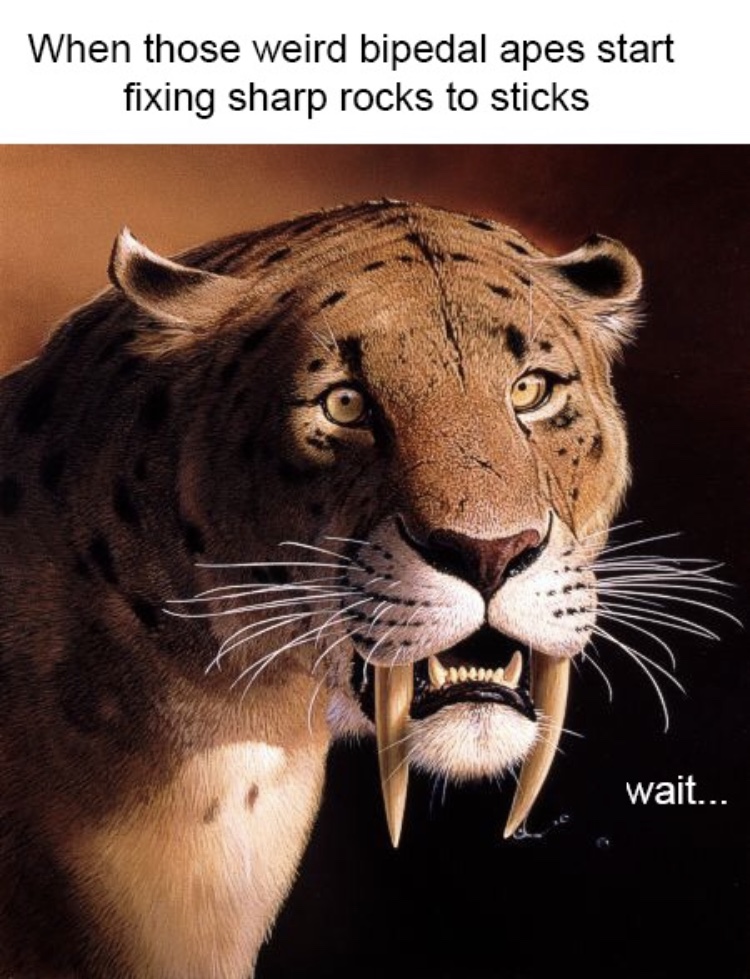
and finished it off. It was a pretty interesting video talking about how all forms of colloquial media, such
as the ever-popular internet meme, are forms of folklore. I, personally, found it to be a very convincing
argument, and it’s something worth considering. Every internet meme, every inside joke you text to
your friends, is a little piece of folklore, and folklore as the whole is the best way to assess a culture of a
time.
It's also worth noting that we’ll be looking at folklore over the year (I mean, it IS a mythology
class), so is this a possible foreshadowing? I guess we’ll just have to wait and find out! I, personally, think
we’ll be doing some culture analysis through the literature we’ll be reading.
After that, we moved on to a more pressing matter: The Summer Reading Project. Initially, I felt
concerned, as many school projects are long and insufferable. This project, though, was a bit different. It
was a group project in which we had to design a book cover illustrating a prequel to a book we had read
over the summer, called The Road by Cormac McCarthy. It’s a post-apocalyptic story about a father a
child wandering, scavenging for any resources left to keep them alive in a dead world, where the cause
of the scenario is never confirmed.
I’ll tell you that my team had a tough time deciding what our cover would be about. We were
tasked with coming up with one backstory to explain the chaos, but our team managed quite a few
theories. Of the bunch, the most prominent theories in my mind were that of a “Judgement Day”, a
nuclear war, and a huge volcanic eruption. The eruption, in my head, was the soundest theory as it
explained the ash mentioned repeatedly in the story.
Tuesday, September 10, 2019
9/10/19 Shannon Brewi PD 7
9/10/19
Shannon Brewi PD 7
Aim: How can we demonstrate the symbolic and metaphorical meaning of an
individual’s personal apocalypse through Cormac McCarthy’s example in The Road?
individual’s personal apocalypse through Cormac McCarthy’s example in The Road?
Notes:
- We continued watching the TEDTalk about how the Internet contributes to folklore by
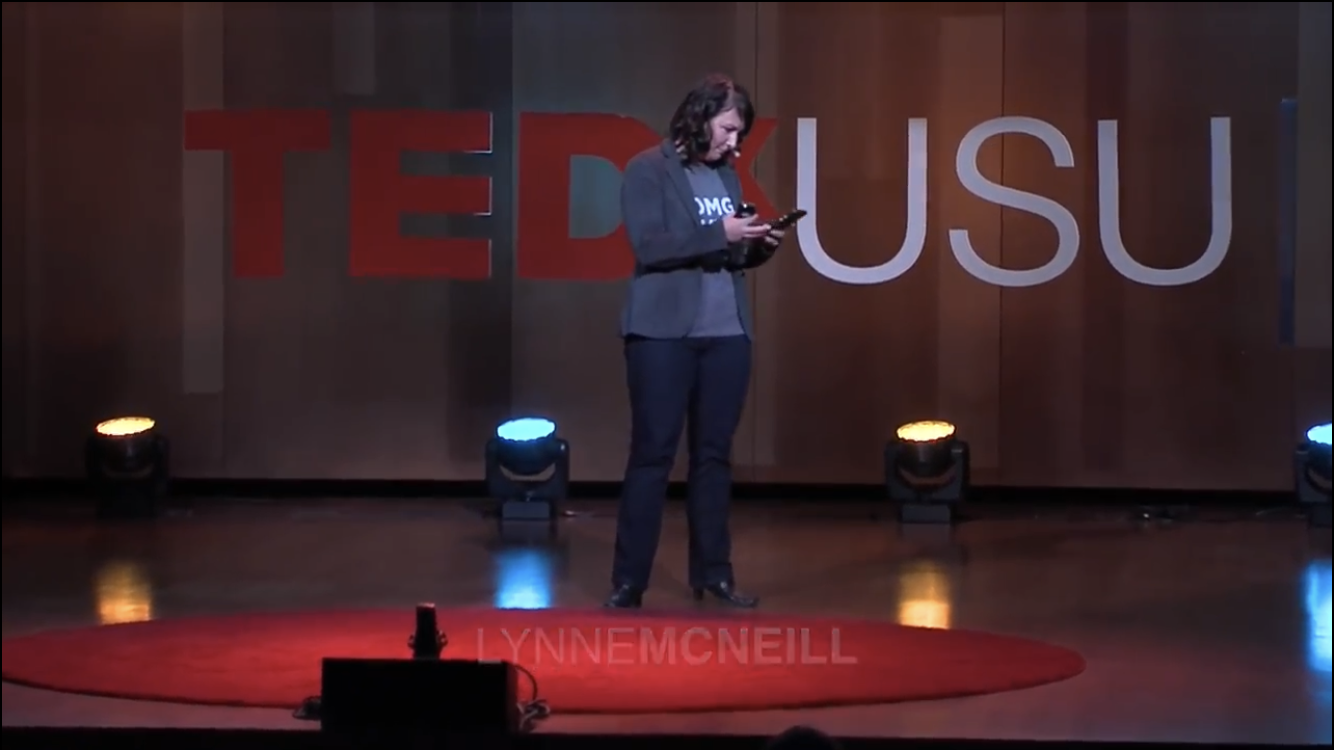
- McNeill relates the saying, “If you give an infinite number of monkeys an infinite number
the Internet. She says that most people believe this statement was proven wrong
considering that almost everyone in the world has access to the Internet, yet instead of
taking advantage of their endless possibilities and creating something great, they waste
their time making memes.
figures and paper airplanes.
- However, folklore doesn’t focus on the cultural influence of only the rare talents. Instead,
figures and paper airplanes.
- She emphasizes that folklore is the culture of everyday people.
- In the past, folklore was never formally recorded, so it was difficult to fully grasp and
inadvertently archived, giving people in the future the ability to thoroughly understand our
culture.
- Therefore, making and sharing memes is participating in the documentation of current
- It can be helpful to study in the future, as the Internet not only captures news stories,
- People may think that memes are unimportant, but McNeill asserts that if something is
- Therefore, the Internet is a worthwhile part of our folklore culture.
- Dejon shared to the class that the video made him realize that everyone in the room
YouTube videos, like the Annoying Orange, to folklore.
- Iandra related the video to an article that claims that our generation is culturally illiterate.
way, and even encourage people our age to use the Internet to become more culturally
literate in a traditional way.
- Shannon added that regional and generational dialects are recorded on the Internet, as
- Ms. Fusaro introduced that we have a Google Drive folder with the purpose of being
mythology-themed memes.
- She assigned our summer reading project, which is to make a book cover for a prequel
She then gave us the rest of the period to discuss our project ideas with our teams.
We discussed folklore as a continuation of our lesson yesterday where we defined and discerned categories of literature. It’s important to know the differences between types of literature, such as legends and fairy tales for example, as we will be learning about them throughout the year. Since folklore is one category that we are less familiar with, we discussed it in depth to highlight the extent to which we come across folklore every day, and to realize that we are active participants in current folklore. For instance, the simple act of going on the Internet is basically like walking through a virtual modern museum. Additionally, we learned how we will further explore and analyze the book we read over the summer, The Road. We will create a project to display the conclusions we drew from the book and compare our unique interpretations with the rest of the class.
Student Reflection:
We discussed folklore as a continuation of our lesson yesterday where we defined and discerned categories of literature. It’s important to know the differences between types of literature, such as legends and fairy tales for example, as we will be learning about them throughout the year. Since folklore is one category that we are less familiar with, we discussed it in depth to highlight the extent to which we come across folklore every day, and to realize that we are active participants in current folklore. For instance, the simple act of going on the Internet is basically like walking through a virtual modern museum. Additionally, we learned how we will further explore and analyze the book we read over the summer, The Road. We will create a project to display the conclusions we drew from the book and compare our unique interpretations with the rest of the class.
Subscribe to:
Posts (Atom)